There are already a number of practical ways to reduce CO₂ emissions in the logistics sector. In this and upcoming newsletters, we explore various sustainable drive energies.
HVO (Hydrotreated Vegetable Oil)
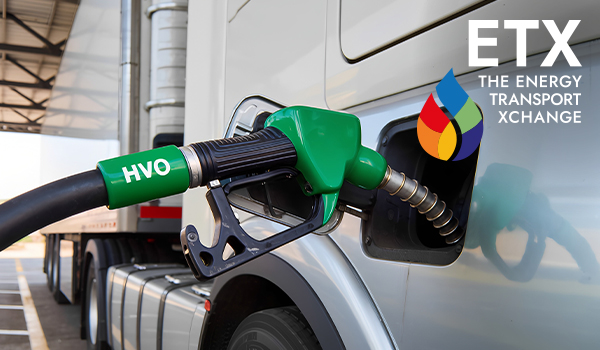
Fueling conventional diesel trucks with HVO is arguably one of the simplest and — at least in terms of initial investment — most cost-effective ways to advance climate protection in road transport.
Since 29 May 2024, HVO has been officially approved for sale as a pure fuel (HVO100) at public filling stations in Germany. Since then, the network of stations offering this alternative fuel has been steadily expanding. The legal basis was created by the inclusion of “paraffinic diesel fuel” in the 10th Federal Immission Control Ordinance. At the pump, this “green” diesel is labelled “XTL” — an abbreviation also found on vehicle fuel caps to indicate compatibility with this fuel.
XTL stands for “X-to-Liquid,” signifying that the synthetic paraffinic diesel can be produced from a variety of feedstocks (X), such as biomass or waste oils.
Because HVO is drop-in compatible, it can be blended with conventional diesel fuel to DIN EN 590 in varying proportions. Classified as paraffinic under EN 15940, HVO burns cleaner than its fossil counterpart and, as a pure fuel (HVO100), reduces new CO₂ emissions by up to 90% compared to conventional diesel.
Seamless in operation
For logistics operators, a truck running on HVO performs exactly like any standard diesel vehicle — no compromises. Most modern diesel trucks can be fueled with HVO100 without issue, and technical retrofitting is generally not required, though manufacturer approval is still recommended.
Neste, for example — the world’s leading producer of sustainable fuels — offers Neste MY Renewable Diesel™, a product that meets the specifications of both ASTM D975 and EN 15940 and is, according to the manufacturer, fully compatible with all diesel engines.
HVO is being adopted by a growing number of users — including companies that produce sustainability reports and are actively working to reduce their carbon footprint. Public fleet operators such as municipalities can also meet the requirements of the German Clean Vehicles Procurement Act (SaubFahrzeugBeschG) simply by fueling their fleets with HVO100.
Conclusion
HVO is a sustainable fuel that requires no investment in new vehicle technology, making it a highly practical and impactful way to significantly reduce the emissions of existing fleets. Supply is secure.