Road to ETX · Part 5 of 5
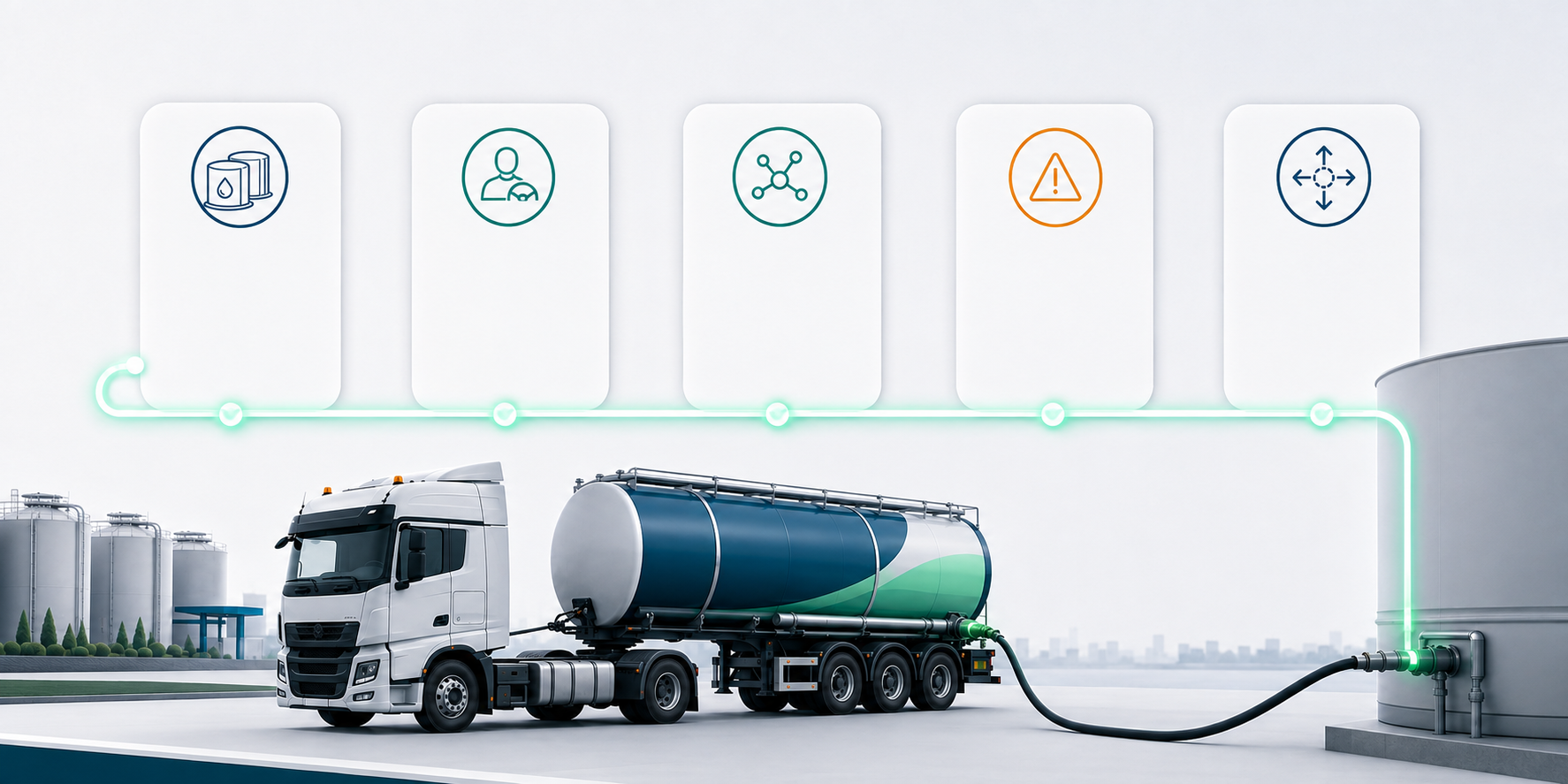
Four weeks, four gaps between capable systems: the last ten metres, the open paperwork, the integration a site inherits and the travelling cost of a stop. Part 5 of 5 turns them into five practical questions for the ETX show floor.
By Secu-Tech
Over four weeks, the Road to ETX series has followed the moments in fuel delivery where capable systems stop behaving like one process.
The gaps were not dramatic technology failures. They were ordinary handovers:
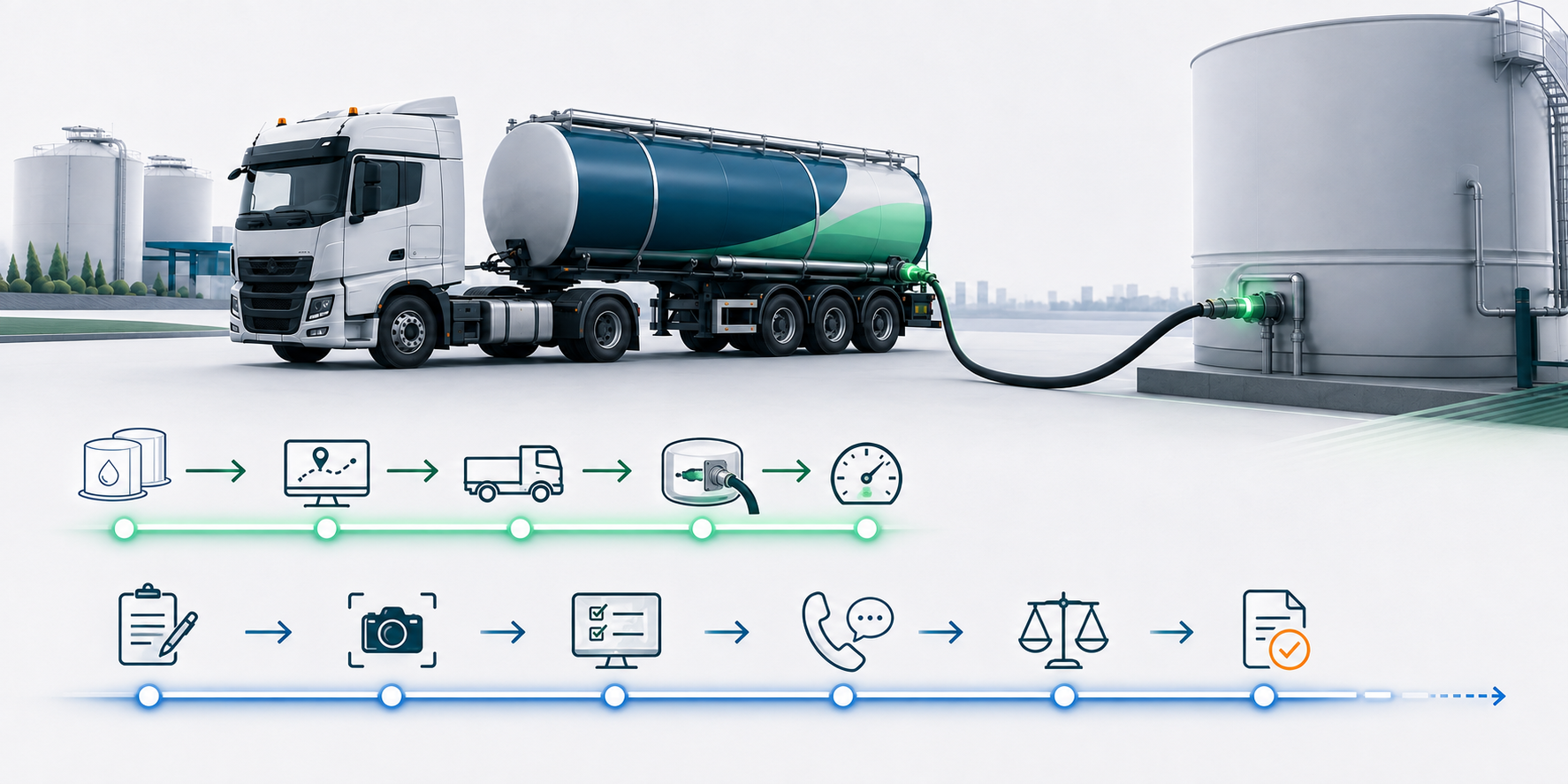
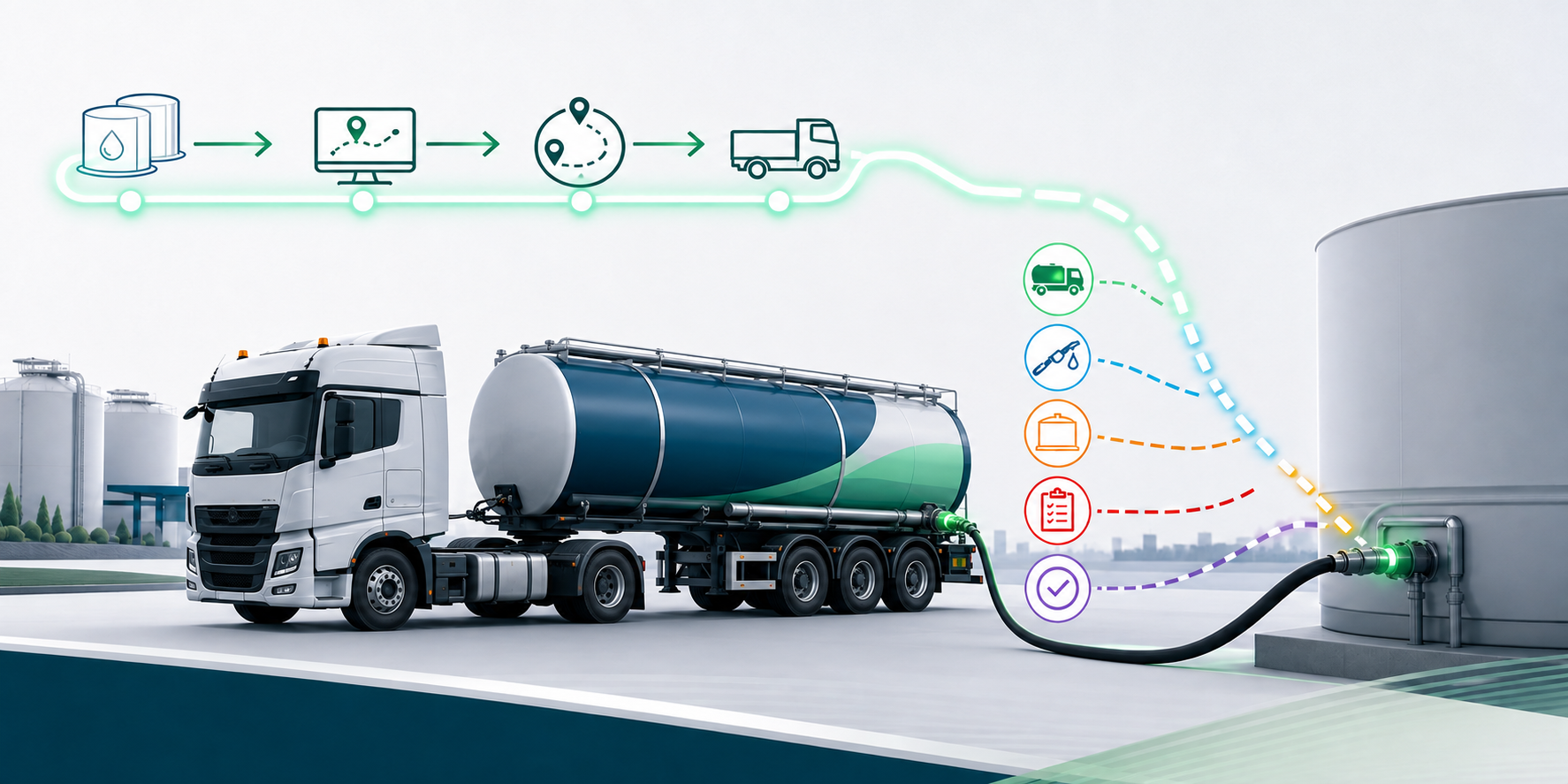
- the final metres between a digitally planned route and the physical delivery;
- the difference between the end of product movement and the end of the commercial transaction;
- integration decisions taken upstream and inherited by the site receiving the delivery;
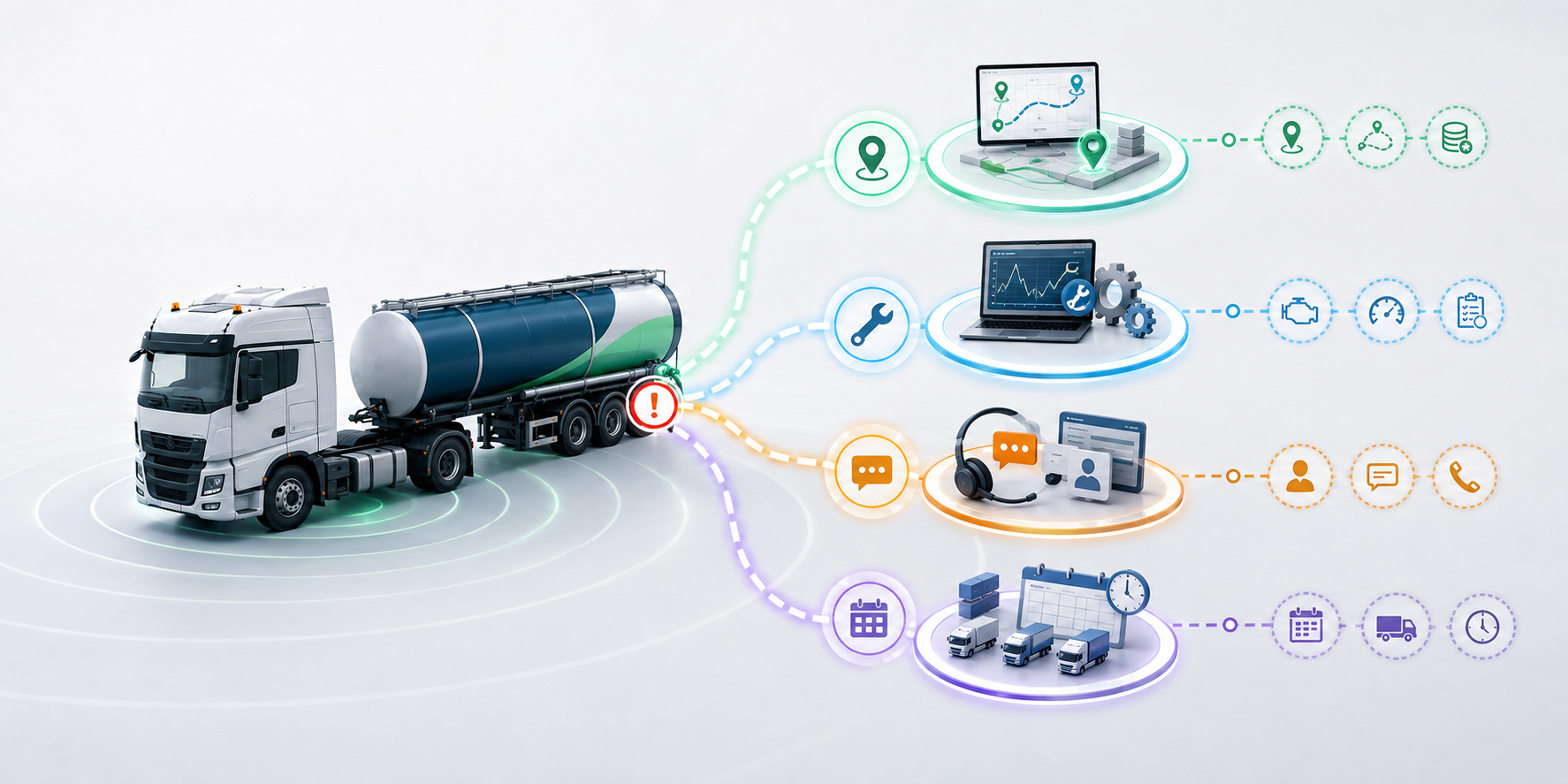
- one interruption creating work across dispatch, service and customer communication.
Each gap points to the same underlying question: does the operational context remain connected as the job moves between people, devices and systems?
ETX opens in Kassel on Thursday 17 September. For fleet operators, vehicle builders, integrators, site and forecourt operators and service organisations, the show is an opportunity to compare answers. These five questions make a useful starting point.
1. Does the delivery remain one event from order to proof?
Ask where the event identity begins and where it is lost.
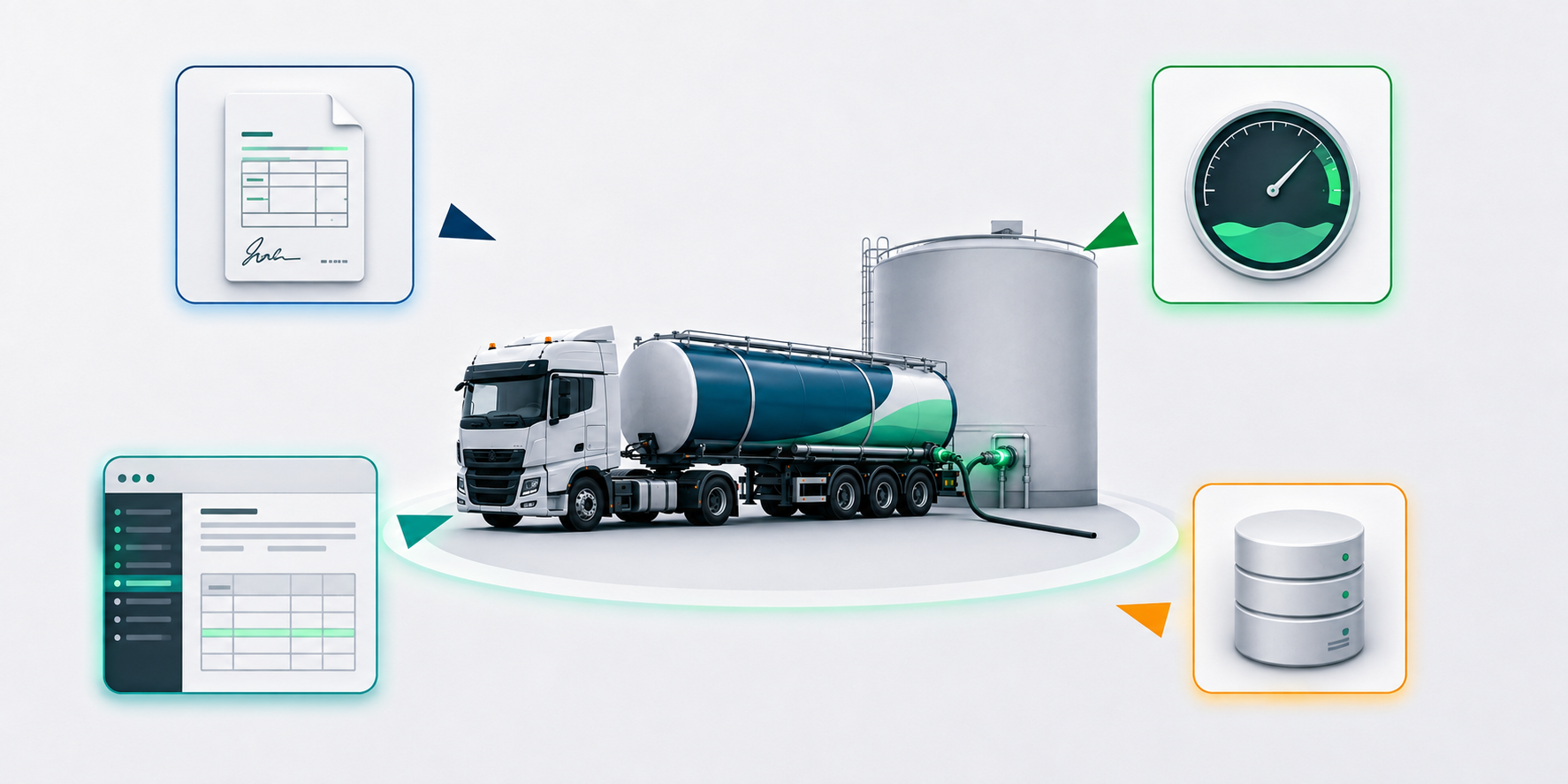
Can order, vehicle, product, measured quantity, delivery record and customer acknowledgement be associated without manual reconstruction? If an exception occurs, does the later record explain the context or merely show that something stopped?
The aim is not one database for everything. It is one recognisable operational event across the systems that need it.
2. Which part of the driver’s time is skilled work, and which part is system translation?
Safe loading and delivery take time. That work should not be confused with waiting for information, copying values or explaining the same event to several functions.
Ask the supplier to follow a complete shift, not just demonstrate an ideal screen. Where does the driver become the integration layer between systems?
3. Was integration decided before anyone had to live with it?
Protocols, wiring, mounting, power, field devices, regulatory boundaries and documentation should not meet for the first time on a production line, and a site should not discover the consequences one delivery at a time.
Ask which functions are common, which are application-specific, which interfaces are documented and how the system can be extended without replacing its foundation.
4. Does an exception carry enough context for the next decision?
A driver, dispatcher and service technician need different views of the same event.
Ask what remains available locally, what can be shared remotely, how the safe state is defined and whether each role can understand the situation without beginning with another phone call.
5. Can the system fit today without closing tomorrow?
The right configuration is not automatically the largest. Fleets need a platform that fits the current vehicle and process while leaving a realistic path for later functions, interfaces and regulatory work.
Ask what can be replaced or extended, which changes require certification work and which promises are supported by the current product rather than a future roadmap.
See the answer in Kassel
Secu-Tech will present XPULSE live at ETX from 17 to 19 September 2026. The 30-minute XPULSE sessions are designed for practical discussion, with time for vehicle, metering, integration and retrofit questions.
ETX 2026
Messe Kassel, Hall 5, Stand H5-B05
Thursday and Friday: 09:00–17:00
Saturday: 09:00–16:00
The number of 30-minute XPULSE sessions is limited. Visitors with a specific project are encouraged to reserve a time before travelling.
Visitors who cannot reach Kassel can follow the public introduction online from 15 September and request a technical conversation after the show. The first priority in Kassel, however, is to put the questions beside the real platform and discuss the installed environment in concrete terms.
Bring one vehicle architecture, one current interface problem or one retrofit constraint. A focused discussion around a real boundary is more useful than a general tour of features, and it gives both sides a clear next question after the show.
About Secu-Tech: Secu-Tech has developed electronic systems for the safe handling, monitoring and documentation of liquids and gases in Leobersdorf, Austria, for more than twenty years.